
This is a guest post generously written by Kelly Wright of Well and Truly Nourished.
I get it. You’re finding your feet with your new baby, bonding, getting to know this tiny new human. You might be recovering from a difficult birth, learning to breastfeed, adjusting to a life that looks completely different to the one you had a few weeks ago.
Nourishing yourself properly is the last thing on your mind.
But here’s what I see time and time again, when new mums don’t eat well, it catches up with them. Not always straight away, sometimes it’s a few weeks down the track, sometimes a few months. And by then, the connection between how they’re feeling and what they’ve been eating is the last thing they think to look at.
Your body is in a state of inflammation after birth. That’s normal, it’s part of the healing process. But what you eat either supports your body in moving through that, or it adds to it. The food on your plate has a direct say in how well, and how quickly, you recover.
And it doesn’t stop at physical recovery. Your nutrition affects your mental health too, your energy, your mood, your ability to manage the hard moments, and how you show up as a mum in this season.
What postpartum under-fuelling actually looks like
Most mums I work with aren’t eating terribly. They’re just not eating enough of the right things, and it’s throwing their blood sugar around all day long.
Breakfast is usually carb-heavy with little to no protein, a piece of toast, some cereal, maybe a smoothie. A morning snack, if there is one, is a piece of fruit or baking. Lunch is light and lacking, the afternoon comes with no snack and a blood sugar crash that hits hard. Dinner is the best meal of the day, and then comes the sweet craving afterwards that feels impossible to ignore.
That pattern tells me everything. Fatigue that won’t lift, low mood, anxiety, disrupted sleep on top of already being woken by baby, possible low milk supply, cravings that feel out of control. These aren’t just part of having a newborn, they’re signs that your body isn’t getting what it needs.
What you need to be eating after having a baby
Real, nutrient-dense food, eaten consistently throughout the day, built around protein and healthy fats at every single meal. Not diet food, not low fat, not skipping meals to get things done. Warm, nourishing food that your body can actually use.
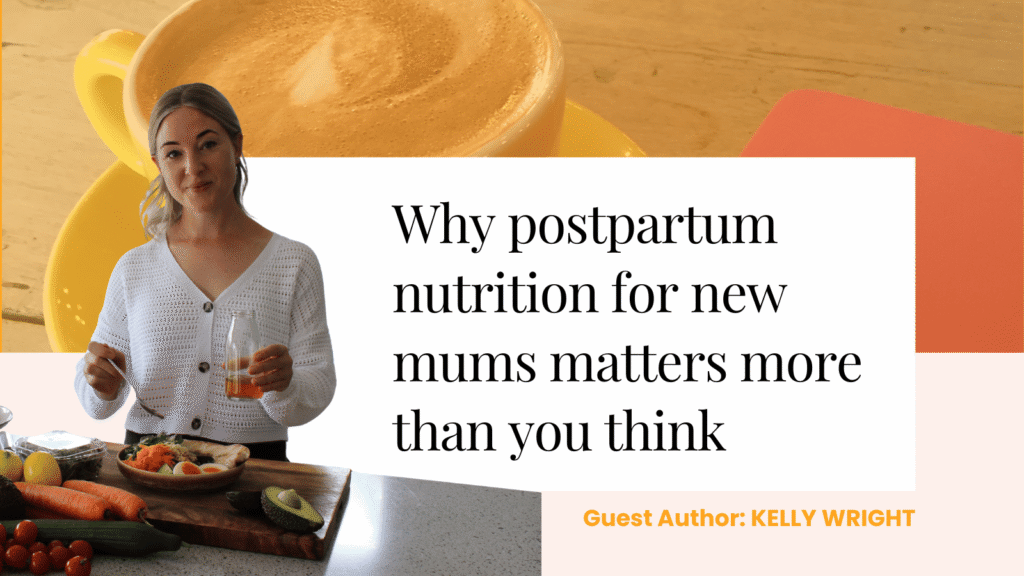
Think slow-cooked stews and soups, bone broth, root vegetables, eggs cooked in butter, salmon, full-fat dairy, warming spices like ginger and turmeric. Foods that stabilise your blood sugar, reduce inflammation, and give your body the raw materials it needs to heal.
The best time to set yourself up is actually before your baby arrives. Batch cooking and freezing meals in late pregnancy, organising a meal train with friends and family, or gathering a small group for a morning of meal prep before your due date can mean your freezer is stocked and your future self is taken care of.
The impact of improving postpartum nutrition for new mums
When the mums I work with start eating this way, the first things they notice are more energy, a more stable mood, and cravings that start to ease. They have more capacity, they feel more like themselves, and they’re able to show up as the mum they want to be rather than just getting through the day.
Ready to actually feel like yourself again?
I work with new mums who are done running on empty. Together we build a real food approach to postpartum nourishment that fits your actual life. No overwhelm, no restriction, no perfect plan you’ll never stick to. Just food that works, and a mum who feels it.
Book your free discovery call here.
